Deprecated: Function WP_Dependencies->add_data() was called with an argument that is deprecated since version 6.9.0! IE conditional comments are ignored by all supported browsers. in /home1/tahercoc/public_html/wp/wp-includes/functions.php on line 6170 Iranian sultana raisins supplier wholesaler Exporter-Taher GroupSkip to contentSkip to content
Tel Office:+98-513-705-8290-1
WhatsApp:+98-90-3333-5009
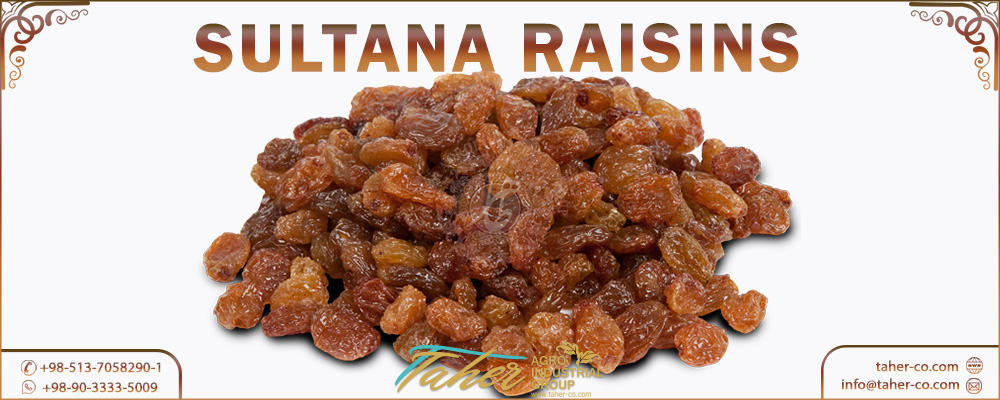
Sultana or Tizabi (acidic) is one of the best-selling raisinsproduced in Iran. Sultana raisins are made of seedless cultivar/species “Vitis Vinifera”. They are light brown to dark brown and they are very sweet because they are high in sugar.
How does sultana raisin produce?
To prepare Sultana, the grapes are dipped in acidic liquid after ripening and harvesting, and then spread in the sun to dry sooner, and acidic raisins are usually obtained within 5 days.
In the processing stages of Sultana, if the grapes are dried with sulfur smoke, their color becomes light brown, but the most common type of Sultana raisin prepared without sulfur smoke is dark brown. And is used in the preparation of breads, cakes and sweets.
Other names of Sultana in the world
Sultana is known worldwide by various names, for example, in Iran it is also called Sultanior Acidic raisin (Tizabi).
In the United States, Sultani raisins are called “golden raisins” or “Sultana“.
In Australia, some Sultanas are made without putting them in acid, so they dry later (about three weeks) and are usually called “natural” Sultanas.
Where are Iranian Sultana raisins produced?
Sultana is also processed in almost all areas where grapes are produced. But the best producers of this product in Iran are: Malayer, Takestan, Abhar, Zanjan, Quchan, Bonab and Malekan.
Consumption of Sultana raisins
Consumption of Sultana raisins is increasing and therefore it is popular in different countries. Uses of the product include:
Replacing the product instead of sugar
Consume them to prepare pilaf and various delicious foods
Prepare bread, cookies, sweets and cakes
How is the price of Sultana determined?
The price of Sultana varieties is determined based on the color of the raisins. The price of dark-colored Sultanas is cheaper than the price of light-colored Sultana raisins. The closer Sultana raisin is to the yellow color, the more valuable it will be.
Raisins should be fresh and new, clean, tailless, washed and without seeds.
In its production, preservatives such as acid (tizab), sulfur and oil have been used as much as allowed.
To have the standard type of packaging (5 layers) and weighs 5 and 10 kg
Sultana packaging and storage conditions:
Storage Conditions:
Store in cool dry ambient away from sunlight and heat sources.
Packaging:
Inner packing: paper tray, apple net, fresh bag or sleeve;
Outer packing: carton
Bulk pack: 10kg
* We also pack the goods according to the customers’ request in different packs and weights.
When and where to buy Sultana raisins?
Taher Agroindustrial Group, as an Iranian supplier and exporter of dried fruits and nuts, is always committed to providing the best quality products, while considering customer requirements and requests and trying to satisfy customers. Since dried fruits are available all year round, we are able to prepareIranian Sultana raisinsin all seasons, however, the best time to prepare fresh Sultanas at reasonable and competitive prices is from September to July.